THE WINDS OF CHANGE IN THE SEVENTIES : THE EXPERIMENTAL YEARS

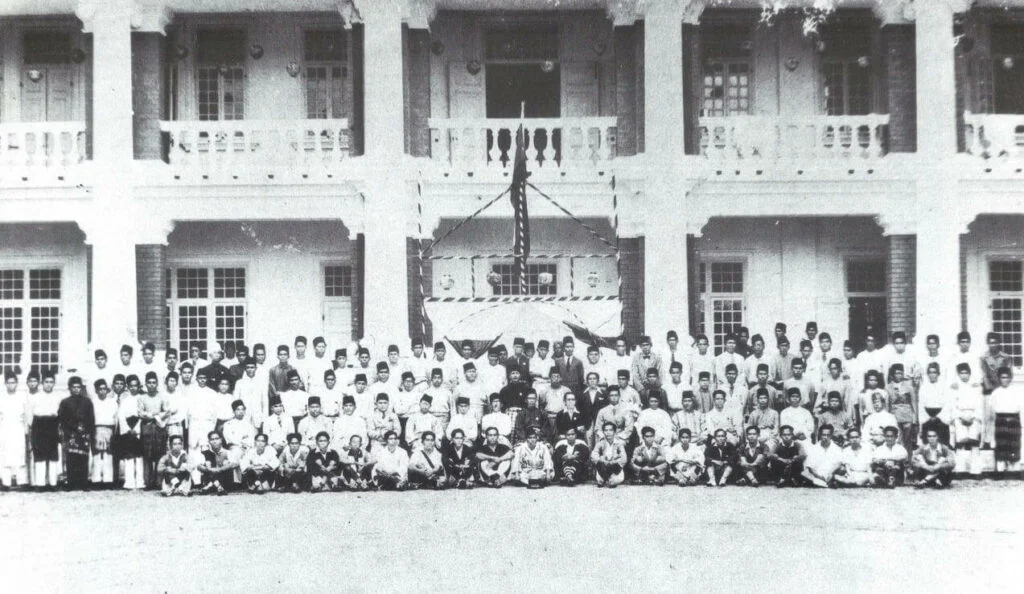
The MCKK, once distinctly class-elitism, continued to take in boys from all social strata in the seventies. The hiatus in the intake of first formers in 1969-1971 was seen as detrimental to the progress of the college and it was revived back in 1972. – with the emergence of the so called “thoroughbreds ( a tag coined by the HM Mr Nordin Nasir in 1974);- a label to indicate a collegian being thoroughly bred and going through the whole mill of MCKK system as was practiced and hoped by the Old Boys. In the seventies, students entered the college at three levels – Form One (retake in 1972), Form Four and Lower Six. Seldom did students come in at any other stage, except perhaps in much earlier days when there were provisions even for primary schooling The Examination Syndicate did the selection for entry based on the results of the Standard Five Assessment Examinations, The LCE/SPM and the MCE/SPM. The college used to get the best English medium Malay boys in the country in the sixties and early seventies, so called crème-de-le crème’. Then when the education system abolished English medium in 1973, the college got the best National medium Malay boys in the country. That was in the seventies and sadly, now no more.


The MCKK of the seventies was filled with a potpourri of bright, young Malay boys of varied backgrounds and social class. The entry requirements had evolved to include merit, and the school started accepting the brightest Malay boys, whatever their backgrounds. First they selected the raw materials, and then they trained to be that way. “That way” included supreme confidence with supreme intelligence, which stemmed from the conviction that they were the chosen few slated for success .Back then, the students knew that they were going to be somebody and they knew they were going somewhere after College. The shift from class elitism to “brain elitism” reflected the change in Malay thinking on leadership – for the college still retained the original aim of molding future leaders. In the early period of the history of MCKK, the college was reserved for the royals, the elites and aristocrats. However, the college also did take in boys from the non-aristocratic families, but these were exceptions. After the Second World War, the College began to enroll sons of the common people till this day. However, with this influx, the challenges of the seventies were plentiful and changes were abound. Of course there were still the Tengkus, Engkus, Rajas, Syeds and the sons of the aristocracies, but they were of a lesser generations, diluted by time and more entrenched like one of the common people.
MCOBA FRUIT FEST AND GOTONG ROYONG SUNDAY 15TH JANUARY 2012 AT MCOBA BUILDING CAR PARK FROM 10 AM TO 5 PM.
MCOBA Durian Fruit Fest 2012


ALL ARE WELCOME TO PAINT THE PERIMETER FENCE AND HELP YOURSELF TO DURIANS, MANGOSTEEN, RAMBUTANS ETC.


.."..I think that I shall never see. A poem lovely as a Big tree. A tree whose lifeline 'secukup rasa'. Against the Kuale's sweet 'angin sepoi2 bahasa'. A Tree that looks at MC all day. And lifts her leafy arms to pray. A tree that may in sunshine wear. A nest of terkukur in her hair; Upon her bosom budak kolet has lain. Who ultimately has wisdom gain. Poems are made by people but Allah can make a Big Tree..."


MCOBA ANNUAL DINNER 2011

The Annual Dinner is scheduled to be on the Saturday 3rd of December 2011 at 8.00 pm at the ISTANA HOTEL, Kuala Lumpur.

BOOKINGS OF TABLES AT RM 1,800 PER TABLE AND RM 180 PER PERSON IS NOW OPENED. Sponsor's Tables are also welcomed

Bookings can be made via the Secretariat on the prescribed forms which will be sent upon enquiry.

As usual tables are limited and an early booking and payment will assure you of better seats. Tables will be allotted on a 'First Come First Pay' basis.

The concert for the Annual Dinner will be a Musical

A musical theatre satire production about the life and times of the spirited spirits of the Malay College and spinning off on a revolution of songs ,dance and sketches whilst spanning around specific timelines in the history or evolution  of the Malay College Kuala Kangsar.

WHY NOT ?? is the theme.

Spice76

Deputy Chairman

MCOBA ANNUAL Dinner Committee 2011

TITAH DIRAJA

DULI YANG MAHA MULIA

PEMANGKU RAJA PERAK DARUL RIDZUAN

RAJA NAZRIN SHAH

DI KONGRES MAJLIS AGAMA ISLAM NEGERI

SELURUH MALAYSIA.

TARIKH: 26 SEPTEMBER 2011 (ISNIN); MASA: 11.30 PAGI

TEMPAT: DEWAN MERDEKA

PUSAT DAGANGAN DUNIA PUTRA, KUALA LUMPUR.

Bismillahi Rahmani Rahim

Assalamualaikum Warahmatullahi Wabarakatuh

Segala puji tertentu bagi ALLAH Subhanahu Wata’ala yang memiliki dan menguasai segala yang ada di langit dan yang ada di bumi, dan bagi Nya (pula) segala puji di akhirat, dan Dialah saja Yang Maha Bijaksana, lagi Maha Mendalam pengetahuan Nya.[1] Hamba-Mu ini, dengan hati yang bening – ingatan yang hening, melafazkan seikhlas tutur dari denyut nadi – menzahirkan setulus kalam dari pancaran hati, kalimah kesyukuran yang setinggi-tingginya atas anugerah rahmat dari Mu jua Ya ALLAH, mengangkatkan martabat Hamba-Mu ini untuk menyempurnakan satu tanggung jawab fardu kifayah di pagi ini. Dengan segala kerendahan sifat – kelemahan kudrat, hamba-Mu mohon mendapat petunjuk dan panduan dari Mu jua.

2. Selawat dan kesejahteraan ke atas Junjungan Besar, Nabi Muhammad Sallallahu Alai Wassalam, semulia-mulia kejadian. Demikian juga ke atas keluarga dan para sahabat Baginda yang merupakan bintang-bintang penunjuk mencernakan cahaya, seterusnya ke atas sekalian para Tabiin dan para ulama yang berperanan sebagai penyuluh daripada kegelapan. Semoga memperoleh ihsan daripada ALLAH Subhanahu Wata’ala sehingga ke hari kebangkitan.

“ WALLAHI, WABILLAHI, WATALLAHI

Maka dengan lafaz ini berikrarlah kami dengan sesungguhnya dan dengan sebenarnya mengaku akan taat setia pada menjalankan dengan adilnya pemerintahan bagi Malaysia dengan mengikut sebagaimana Undang-undang dan Perlembagaan Negeri yang telah disah dan dimasyhurkan dan yang akan disah dan dimasyhurkan di masa hadapan ini. Dan lagi kami berikrar mengaku dengan sesungguhnya dan dengan sebenarnya memeliharakan pada setiap masa Agama Islam dan berdiri tetap atas pemerintahan yang adil dan aman di dalam negeri.”[2]

3. Demikian lafaz ikrar sumpah jawatan Seri Paduka Baginda Yang Dipertuan Agong selaku Ketua Utama Negara. Status Ketua Utama Negara bukan sekadar simbol hiasan. Status Ketua Agama Negara menuntut kepada penyempurnaan tanggung jawab besar memenuhi amanah. Terkandung lima kata kunci dalam sumpah jawatan tersebut; ia itu: Undang-undang, Perlembagaan Negeri, Agama Islam, Adil dan Aman.

___________


Admin Note: MCOBA expressed our appreciation and gratitude to DYMM Raja Nazrin Shah who is also the Chairman of The Malay College Board of Governors for giving us his permission to publish the text of his speech whom we consider as an important "must read" article for all responsible citizens of Malaysia.


News

Related To Political Opinion


‘Malay Racialism and the Sufi Alternative’


Abg Zin,


My latest contribution to knowledge is attached: a book chapter 'Malay Racialism and the Sufi Alternative’, in Maznah Mohamad and Syed Muhd Khairudin Aljunied (eds.), Melayu: The Politics, Poetics and Paradoxes of Malayness, Singapore: National University ofSingapore Press, 2011, pp. 68-100. The book is fresh off the press for only about a week or so; see the attached flyer and also http://www.nus.edu.sg/nuspress/subjects/anthro/978-9971-69-555-2.html.


Issues touched in this book will be directly relevant to those in the minds of MCOBs sensitive to the plight of the Malays. The editor, Dr. Maznah Mohamad, formerly of USM and now at NUS, should be familiar to some as a commentator on issues regarding Malays. If you feel that the article is suitable to be blogged in MCOBA's website, please feel free to do so.

Best wishes,

Ahmad Fauzi Abdul Hamid, Ph.D. (Sulaiman 1986)
Assoc Prof of Political Science
School of Distance Education
USM, 11800 Penang.
_____

Admin Note:-


ASW Assoc Prof Ahmad Fauzi Ph.D ( Hi Adik ~ tertib orang Melayu: pangillan yang tua pada kita digelarkan Abang dan yang muda pula digelarkan Adik; kekadang diikutu dengan "honorifics". It's the same too for all civilized race. The Chinese will say, koko (abang), ceche (kakak) and we all do say " Nak nenen ke ?" atau kalau ibu yang tengah frust, ada juga yang tempik " FASTER DRINK YOUR NENEN (susu) OR I TELL YOUR PAPA WE DON'T GO TO TESCO NOW " -- Papa AU, KK dan MBA tenung tajam mata wifey lantas menyampuk "don't worry Honey, we will go out for dinner". Ehem ehem.

Sorry, I digress. Ahmad Fauzi C'86 is a frequent contributor to Mcoba.Org and Mcobs should read the book Melayu: The Politics, Poetics and Paradoxes of Malayness (see pdf attachment); in Chapter 3, a refreshing perspective on Malay Racialism and the Sufi Alternative.


"The war between the Muslims and non-Muslims was a war of ideals, as every war more or lees is, and whenever such a war occurred the dying and degenerate civilization had to go down before the superior ideals of life preached by Islam. "Say: my prayer, my sacrifice, my life and my death are for the sake of Allah, the Cherisher of the Worlds." The Quran Vi (Al-An'am 162. -- wrote M.M. ZUHURU"DIN-DIN AHMAD, Professor of Logic and Philosophy at the Ismail College, Andheri (Bombay) - An Examination of the MYSTIC TENDENCIES IN ISLAM In The Light of The Quran and Traditions


Penerbitan Bahasa Melayu dan Iklan

Oleh Rejal Arbee


"Kalau kita benar-benar sayangkan bahasa Melayu bukan saja sebagai bahasa negara ini tetapi juga sebagai bahasa Kebangsaan dan bahasa Rasmi kenapa pihak berwajib tidak mahu menekankan kepada syarikat-syarikat iklan betapa perlunya mereka juga mendokong bahasa negara di mana mereka menetap dan beroperasi"


Sesuatu penerbitan berkala di mana saja di dunia ini akan dapat bertahan hanya bila mendapat dokongan dua pihak, ia itu pembeli dan pengiklan. Pendapatan dari kedua sumber ini harus mencukupi untuk menampung perbelanjaan menerbitkan sesebuah akhbar atau majalah hingga boleh menjamin keujudannya secara berterusan sebagai suatu usaha bisnes.


Bagaimana pun sebelum sesuatu penerbitan itu boleh mengharapkan ia digunakan sebagai sebuah media untuk mengiklankan sesuatu produk perniagaan mahu pun perkhidmatan, ia perlu dahulu mendapat sokongan dari pembacanya, ia itu ia harus dapat dijual kepada sejumlah pembaca yang dianggap cukup untuk boleh menarik iklan.


Maka itu edaran sesebuah penerbitan berkala amat penting. Lagi banyak edarannya akan lebih mudah ia mendapatkan sokongan syarikat yang mahu iklankan barangan keluarannya atau pun perkhidmatan yang diberikan. Ini adalah secara prinsipnya dan berlaku juga di Malaysia sebagaimana di tempat-tempat lain.


Oleh itu tanpa pendapatan secukupnya dari iklan yang dimuatkannya sesebuah majalah atau akhbar tidak mungkin dapat bertahan lama melainkan sesuatu penerbitan itu dikeluarkan untuk sesuatu tujuan tertentu di mana penerbitnya tidak mengharapkan pulangan pendapatan, misalnya akhbar parti politik atau terbitan sesuatu pertubuhan yang diedarkan kepada ahli tanpa mengharapkan pulangan.


Di Malaysia kerana ujudnya keadaan majmuk terdapat akhbar dalam pelbagai bahasa, ia itu akhbar berbahasa Melayu, Inggeris, Cina dan Tamil. Malah ada juga akhbar mingguan dalam bahasa Punjabi. Akhbar berbahasa sukuan ini, ia itu Cina dan Tamil hanya dibeli oleh orang Cina dan India sahaja kerana sedikit sekali orang Melayu yang tahu berbahasa Mandarin atau pun Tamil.


Bagaimana pun kedudukan akhbar Melayu dari segi pembacanya juga tidak menyeluruh kerana tidak ramai daripada warganegara  terdiri dari kuam Cina dan India yang membaca akhbar Melayu. Kalau hendak di fikirkan sememangnya ini suatu keadaan aneh kerana rakyat negara ini semuanya harus mendokong bahasa Melayu sebagai bahasa Rasmi dan bahasa Kebangsaan tetapi maseh terdapat sejumlah besar rakyatnya yang bukan saja tidak boleh bertutur BM bahkan tidak boleh memahaminya pun.


Maka itulah hingga sekarang walau pun perbicaraan di mahkamah misalnya telah ditetapkan di adakan dalam BM tetapi apabila terdapat rakyat berbangsa Cina atau India yang menghadapi sesuatu pertuduhan memerlukan juru bahasa untuk menterjemahkan tuduhan ke atas mereka dalam bahasa ibunda mereka.


Kejohanan Pembangunan Ragbi Perak Utara Bawah-14 (2011)


Organized by:


The Malay College Kuala Kangsar [MCKK] In Association With CIMB Foundation-COBRA Development Programme


Premier school The Malay College Kuala Kangsar (MCKK) in association with The CIMB Foundation-COBRA Development Programme, are pleased to invite you to the under-14 age group schools RUGBY TOURNAMENT to be held on Friday 30th September, Saturday, 1st October and Sunday, 2nd October 2011 in MCKK in Kuala Kangsar, Perak.


This INAUGURAL 15-a-side rugby tournament, hosted by MCKK will be participated by 8 top rugby schools and is part of an overall initiative to promote and develop rugby in the northern region of Perak.


Other rugby development initiatives include rugby clinics by COBRA Rugby club, Rugby Seminars by the Malaysia Rugby Union and Courses for Coaches by the International Rugby Board (IRB).


We will also witness prize presentations to the winning teams by Main Sponsor – CIMB FOUNDATION on the final day of the tournament 2nd October 2011, Sunday 5p.m. at The Malay College Kuala Kangsar Rugby Grounds in Perak.


Also slated to be present are senior representatives from the sponsors, MCOBA members, Organizing Committee members, friends of MCKK & MCOBA and fans of rugby.


TOURNAMENT details:

Dates :

Day 1 : 30th September 2011, Friday (4.30 pm – 6 pm)

Day 2 : 1st October 2011, Saturday (8 am – 6 pm)

Day 3 : 2nd October 2011, Sunday (8 am – 6 pm).


Venue :


THE MALAY COLLEGE KUALA KANGSAR, 33000 KUALA KANGSAR, PERAK DARUL RIDZUAN,
TEL : 05-7761400. FAX : 05-7764500


_________________________________________________________

Final Results Oct 3, 2011

Cup Final - MCKK 'A' defeated King Edward, Taiping (14-5)
Plate Final - MCKK 'B' defeated SMK Dr Burhanuddin, Taiping (19-0)

SAVE THE BIG SCHOOL !

News

Related To MCOBA Business Council

SAVE THE BIG SCHOOL

BE A PART OF IT !


Have you ever really taken a good look at a postage stamp and considered what it represents? That little piece of paper is actually an ambassador representing its state through the people, places, and history depicted on it. To many, a postage stamp is maybe just a stamp; diminutive in nature, revenue related in character and ever ready for a licking. On the hind side, figuratively a stamp is a distinctive mark or impression made upon an object, a device used to make it, or a distinctive sticker applied to an object. It may also include other vouchers or records with similar purposes. Many see a postage stamp as a small piece of paper that is purchased and displayed on an item of mail as evidence of payment of postage. A postage stamp becomes a collectible when it becomes a commemorative stamp since the stamp is often issued on a significant date such as an anniversary, to honour or commemorate a place, event or person. Then again, when a stamp is a revenue stamp, tax stamp or fiscal stamp it is an (usually) adhesive label used to collect taxes or fees on many things.

As such, the four words “Save the Big School” printed on the stamp signifies all the above, a collectible item to commemorate the Big School, whilst partaking in a fiscal contribution to it. Thus the “Save the Big School” Stamp - our official campaign logo - is an official mark indicating genuineness, validity, etc., or payment of a duty or charge; and most importantly, as a national heritage building, we need you fellow Malaysians to BE A PART OF IT !


< >

< >

< >

< >